

Bioplastics in waste streams should be easy to find. They are on supermarket shelves, in shopping bags and in food packaging. Yet when MoeBIOS partners went looking for them in real waste, they found very few. This article explains why, and what it means for bioplastic recycling.
Looking for bioplastics in real waste
In its first stage, MoeBIOS characterised real waste streams to locate bioplastics. Partners analysed two streams: residual waste and packaging waste.
The logic is simple. Before you can sort and recycle bioplastics, you need to know how much of them reaches the plant. You also need to know what condition they arrive in.
That answer was harder to get than expected. The team struggled to find relevant quantities of bioplastics in either stream.
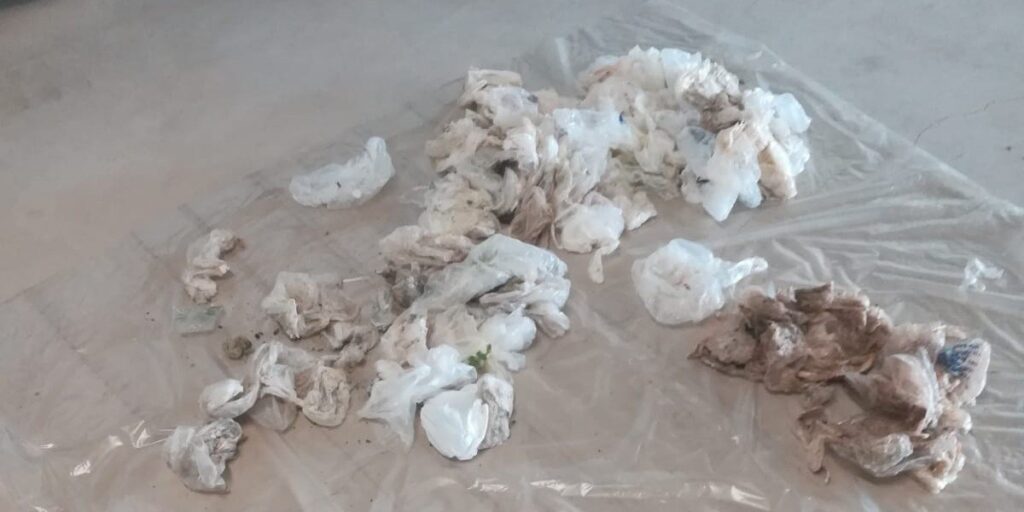
Three reasons bioplastics in waste streams are hard to find
The first reason is the market itself. The shift from fossil-based plastics to bioplastics is moving slower than expected. If few bioplastics reach the shelves, few reach the bin.
The second reason is sorting. Once bioplastics mix with fossil-based plastics, they are very hard to tell apart. A bioplastic film and a conventional film can look almost identical. Most sorting lines today are not designed to separate them.
The third reason is the brown bin. A small share of bioplastics never enters the plastic streams at all. Items labelled as compostable often go into the organic waste container. That is exactly where their label tells people to put them.
Not all bioplastics are compostable
“Bioplastic” is an umbrella term. It covers materials that are bio-based, meaning made from natural resources, or biodegradable, meaning broken down by microorganisms. Some materials are both.
In practice, bioplastics fall into three main families. Some are bio-based but not biodegradable. Some are both bio-based and biodegradable. Others come from fossil resources but are still biodegradable.
Compostable plastics are a specific group within biodegradable plastics. They are designed to break down under controlled composting conditions into carbon dioxide, water and biomass.
The compostable plastics most relevant to MoeBIOS include PLA, PHA, PBAT and PBS. Starch-based and sugarcane-based materials also appear in these streams.
The brown bin dilemma
People who put compostable items in the brown bin are doing the right thing. That is the intended destination for these products.
From a recycling point of view, however, these bioplastics leave the loop. Instead of becoming new materials, they are composted, or end up in landfill if they do not break down in time. Keeping bioplastics in use through recycling is a core aim of MoeBIOS.
Recovering them from organic waste is not realistic today. Organic waste plants usually have no equipment to sort plastics. More than 80% of what enters them is assumed to be organic matter.
Not every compostable bioplastic fits the recycling routes MoeBIOS studies either. The team excluded starch-based bags and sugarcane-based plates from its sorting and separation studies. Once contaminated by other waste, these items no longer met the conditions for the mechanical or chemical recycling methods under study.
Twelve weeks on paper, longer in practice
Compostable bioplastics in the organic stream raise a second challenge: time. How fast they break down depends on oxygen, temperature, pH and humidity. Each material behaves differently.
The European standard EN 13432 sets the benchmark for industrial compostability. A material must physically disintegrate within 12 weeks. It must also reach more than 90% biodegradation within six months. Certification labels such as OK compost INDUSTRIAL build on these criteria.
Real composting plants do not always run on the same timeline as these tests. As a result, some compostable items can leave the plant before they fully break down. They may then end up taking space in landfills.
What this means for MoeBIOS
These findings help the project ground its work in reality. Alongside the current situation, MoeBIOS designs future scenarios where bioplastics make up a larger share of waste. This lets partners plan sorting and recycling trials for the volumes Europe may see in the coming years.
The findings also show why better identification and sorting of bioplastics matters. If bioplastics cannot be found, they cannot be recycled.
Want to understand the difference between biodegradable and recyclable bioplastics? Read our explainer and follow MoeBIOS on LinkedIn for the next updates.